AI & Machine Learning in Surveying: Integrating Intelligent Insights into Modern GIS Workflows
Surveying has always been built on one essential promise: trusted accuracy. Today, innovations in Ai & Machine Learning in GIS are transforming how we approach topographic surveys and boundary definition to infrastructure layout, construction verification, and reality capture, where every deliverable depends on precision.
But today, precision alone is no longer enough.
As projects become larger, more connected, and increasingly data-intensive, surveyors are being asked to deliver more than measurements; they are being asked to deliver insight. This shift is closely tied to the evolution of Geographic Information Systems (GIS), where spatial data is not only stored and visualised but also analysed and used to drive decision-making.
This is where Artificial Intelligence (AI) and Machine Learning (ML) are reshaping both surveying and GIS workflows.
Across the geospatial industry, intelligent technologies are helping professionals process larger datasets, reduce repetitive work, improve quality control, and make faster, more informed decisions. Rather than replacing the surveyor, AI enhances professional expertise, helping teams move more efficiently from field data to GIS-ready intelligence.
Surveying as the Foundation of GIS
Surveying remains the primary source of high-accuracy spatial data within GIS environments, and “surveying is actively shaping how GIS systems function in real time.” These are plausible in many projects, but not universally true across all GIS domains. However, the role of surveying is evolving.
Traditionally, survey data entered GIS as static layers of points, lines, and polygons used for mapping and documentation. Today, AI-driven workflows are transforming this process by converting raw survey data into structured, enriched, and analysis-ready information before it even reaches the GIS platform.
This means:
- Faster integration into GIS databases
- Higher data consistency and quality
- Reduced manual processing and interpretation
Surveying is no longer just feeding GIS; it is actively shaping how GIS systems function in real time.
AI and Machine Learning: Transforming Survey Data into GIS Intelligence
AI and ML technologies are bridging the gap between raw data collection and spatial analysis.
In modern workflows:
- Point clouds are automatically classified into terrain, buildings, and vegetation
- Imagery is processed into land-use and feature maps
- Field data is validated and cleaned in near real time
For GIS, this results in:
- Automated feature extraction
- Faster spatial analysis
- Improved predictive modelling
Instead of spending time preparing data, GIS professionals can focus on interpreting results and supporting decision-making. The value of survey data increases significantly when it arrives already enriched with intelligence.
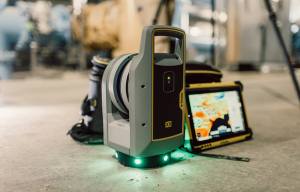
Connected Workflows: The Link Between Surveying and GIS
The greatest impact of AI is realised within connected workflows.
Historically, surveying involved multiple handoffs between field crews, processors, CAD technicians, and GIS analysts. Each step introduced delays, inconsistencies, and risk.
Connected, cloud-based systems now enable seamless data to flow between field and office, ensuring that survey data becomes immediately accessible within GIS environments.
These workflows support:
- Real-time collaboration across teams
- Consistent data standards
- Early detection of errors
- Improved project visibility
More importantly, they enable survey data to integrate directly into broader GIS ecosystems, including construction coordination, asset management, and infrastructure planning.
Surveying is no longer a standalone process; it is part of a continuous, connected spatial data pipeline.
Reality Capture and the Rise of 3D GIS
Modern surveying technologies such as LiDAR, photogrammetry, and mobile mapping are producing highly detailed reality capture datasets.
These datasets form the backbone of advanced GIS applications, including:
- 3D city models
- Digital terrain and surface models
- Infrastructure and asset inventories
AI enhances these datasets by:
- Automatically identifying and classifying features
- Detecting anomalies and inconsistencies
- Supporting simulations and scenario analysis
As a result, GIS is evolving from 2D mapping into fully immersive 3D and even 4D environments, where time and change can be analysed alongside space.
From Measurement to Spatial Decision Support
The integration of surveying, AI, and GIS is redefining the role of geospatial professionals.
- Surveying ensures accuracy
- AI delivers efficiency and intelligence
- GIS provides context and decision support
Together, they create systems where spatial data is continuously collected, intelligently processed, and immediately usable across the project lifecycle.
Surveyors are no longer just data collectors; they are key contributors to spatial intelligence systems that support planning, design, construction, and long-term asset management.
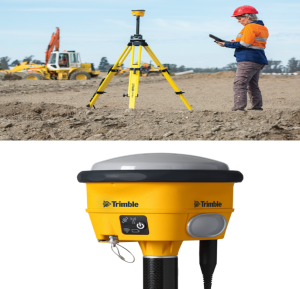
Conclusion: The Future Is Intelligent, Connected, and GIS-Driven
Surveying is entering a new phase of digital maturity, one that is deeply interconnected with GIS.
The profession is moving beyond measurement and documentation toward a model defined by:
- Connected data ecosystems
- Intelligent processing
- Real-time collaboration
- Insight-driven decision-making
This transformation is already visible in how modern teams operate:
- Capturing higher-quality data in the field
- Processing complex datasets efficiently
- Integrating seamlessly with GIS platforms
- Delivering actionable insights faster
The future of surveying will still be built on accuracy. But increasingly, its true value will be realised through its integration with GIS, where data becomes intelligence, and intelligence drives better decisions.